
TUNCA
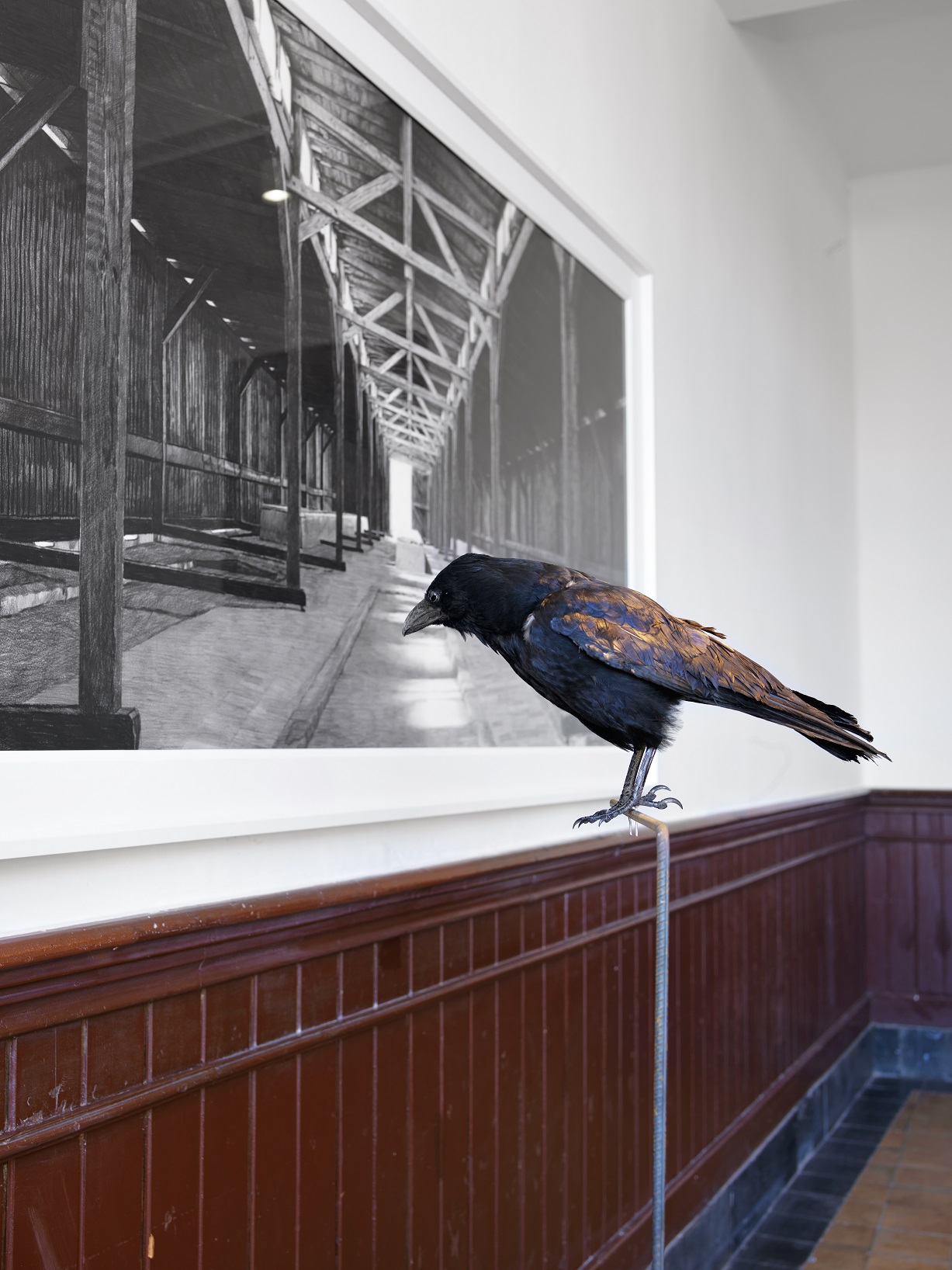
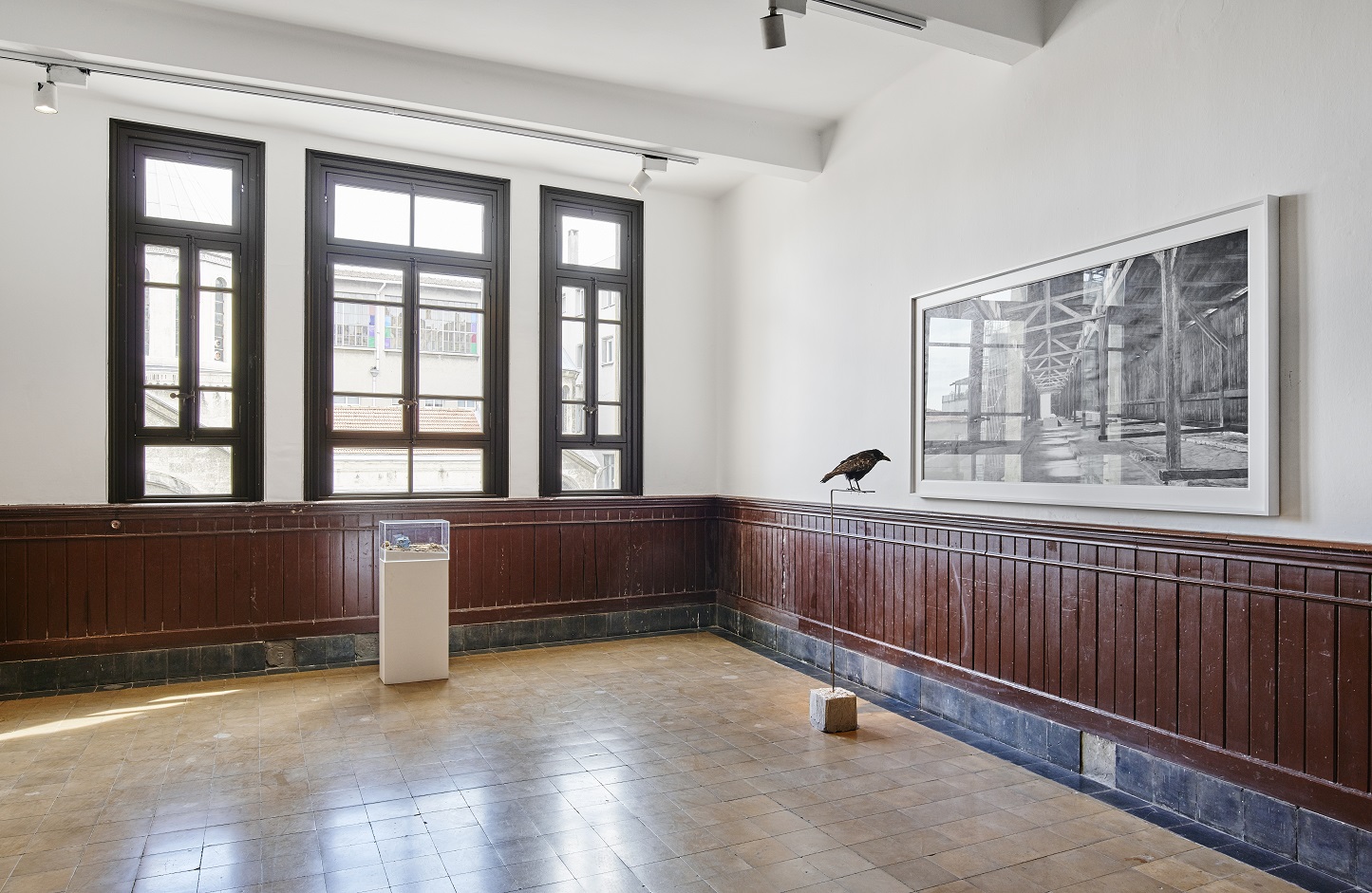
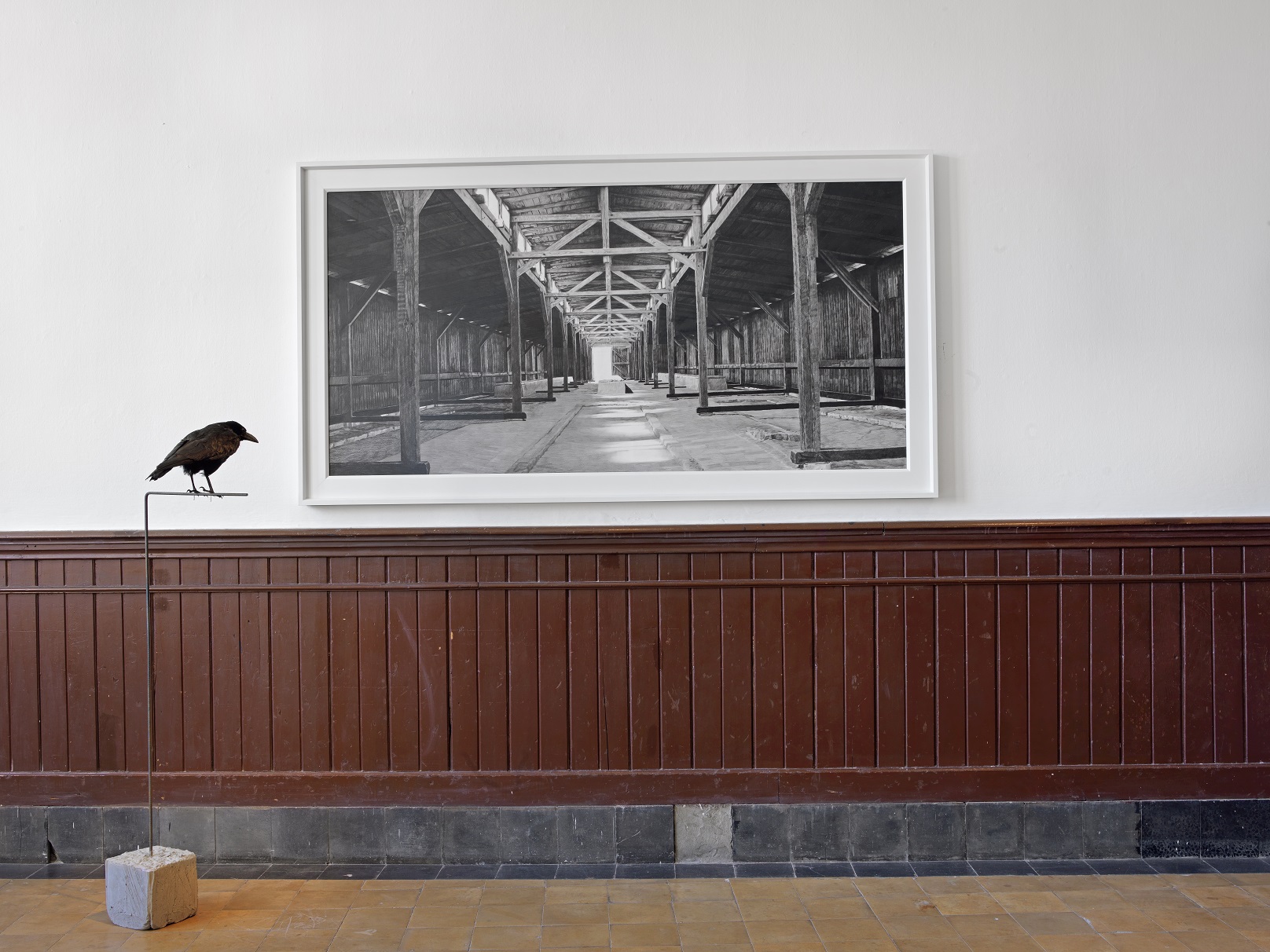
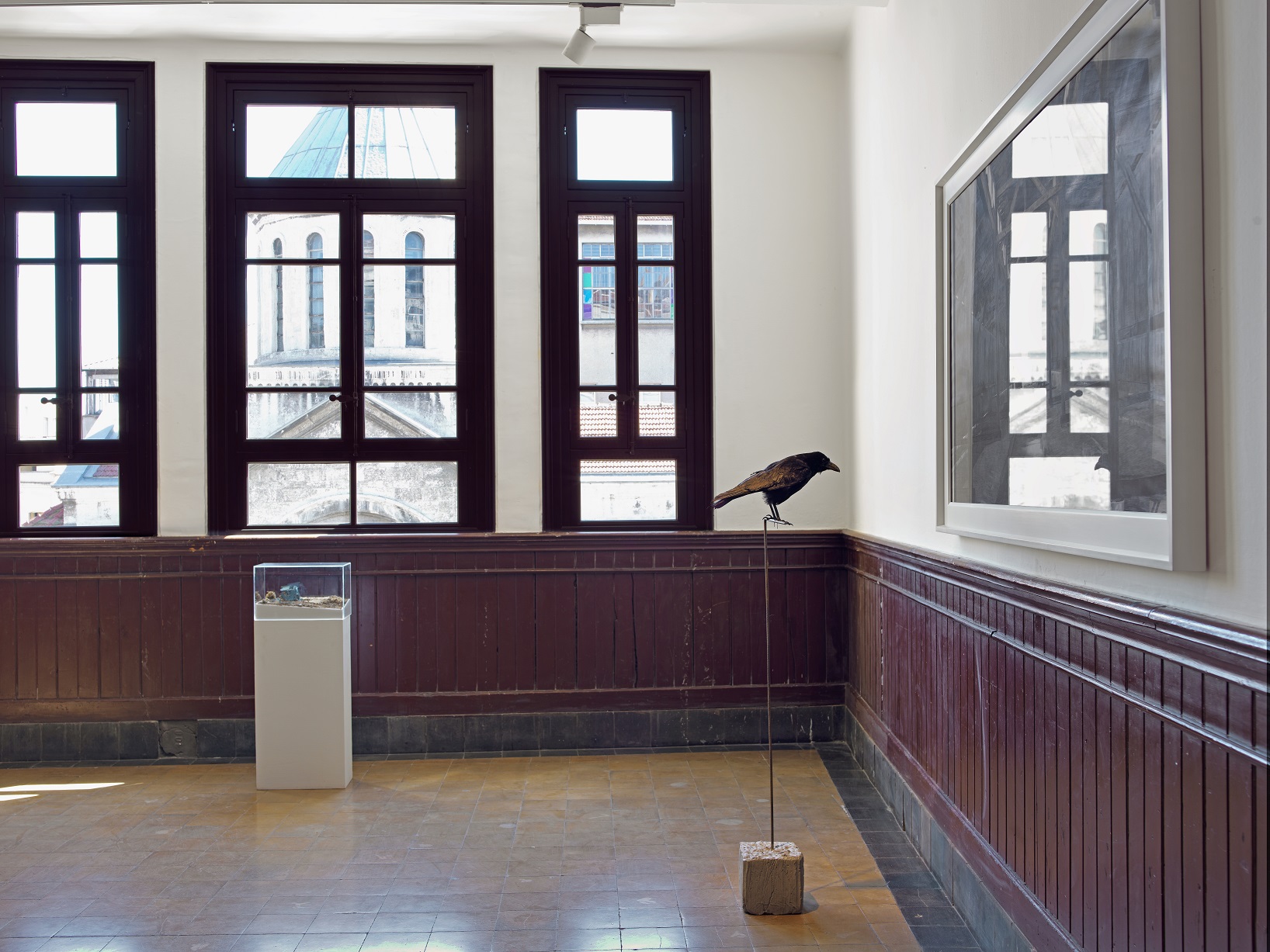
Kras Kras, 2017, Taxidermied raven, cast-iron beak
Possessing numerous mythological and symbolic meanings, the raven assumed the role of a kind of secret guide in Terra Amata, the exhibition I presented in 2017. Despite its many positive associations, including its role as a bearer of secrets, the raven has also accumulated darker meanings throughout the course of the history it has witnessed. The sculpture’s metal beak refers to the Qur’anic account in which Cain, one of Adam’s sons, is left not knowing what to do after killing his own brother Abel. Upon seeing a raven scratching at the earth nearby, he follows its example and digs into the ground, thus bringing about the first burial of a human being. The raven’s association with death—and, through the idea of returning to a particular place, with the concept of place itself—can be traced back to ancient narratives. The work relates to the exhibition as a whole through the “grave,” one of humankind’s earliest encounters with architecture. The Romans associated the raven’s call with the Latin word cras, meaning “tomorrow,” and interpreted its cry as “Cras! Cras!” In this repetition, which also gives the sculpture its title, lies the hope of hope itself: a hope directed towards “tomorrow,” towards a future in which we confront the past.