

Hakan Onur
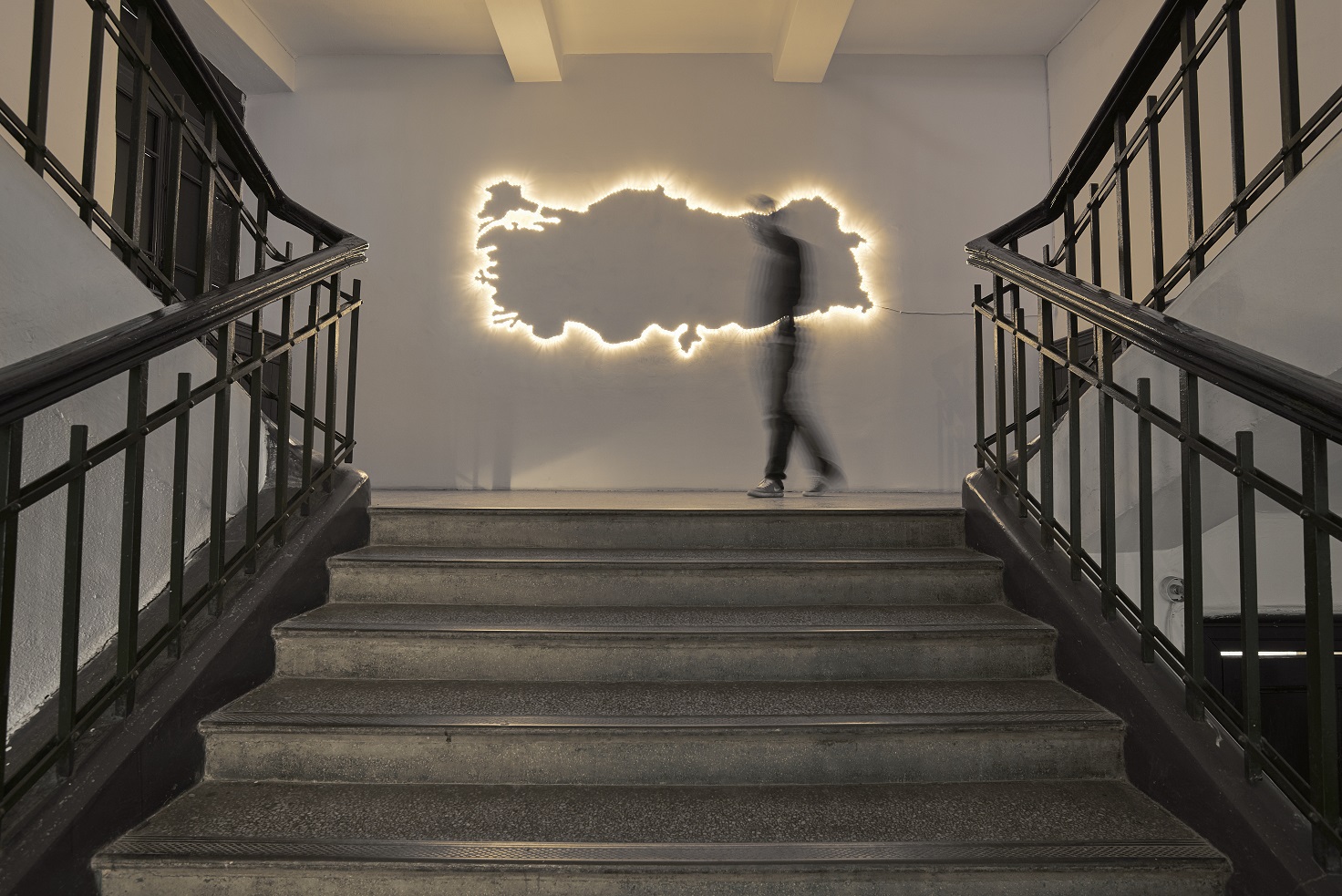
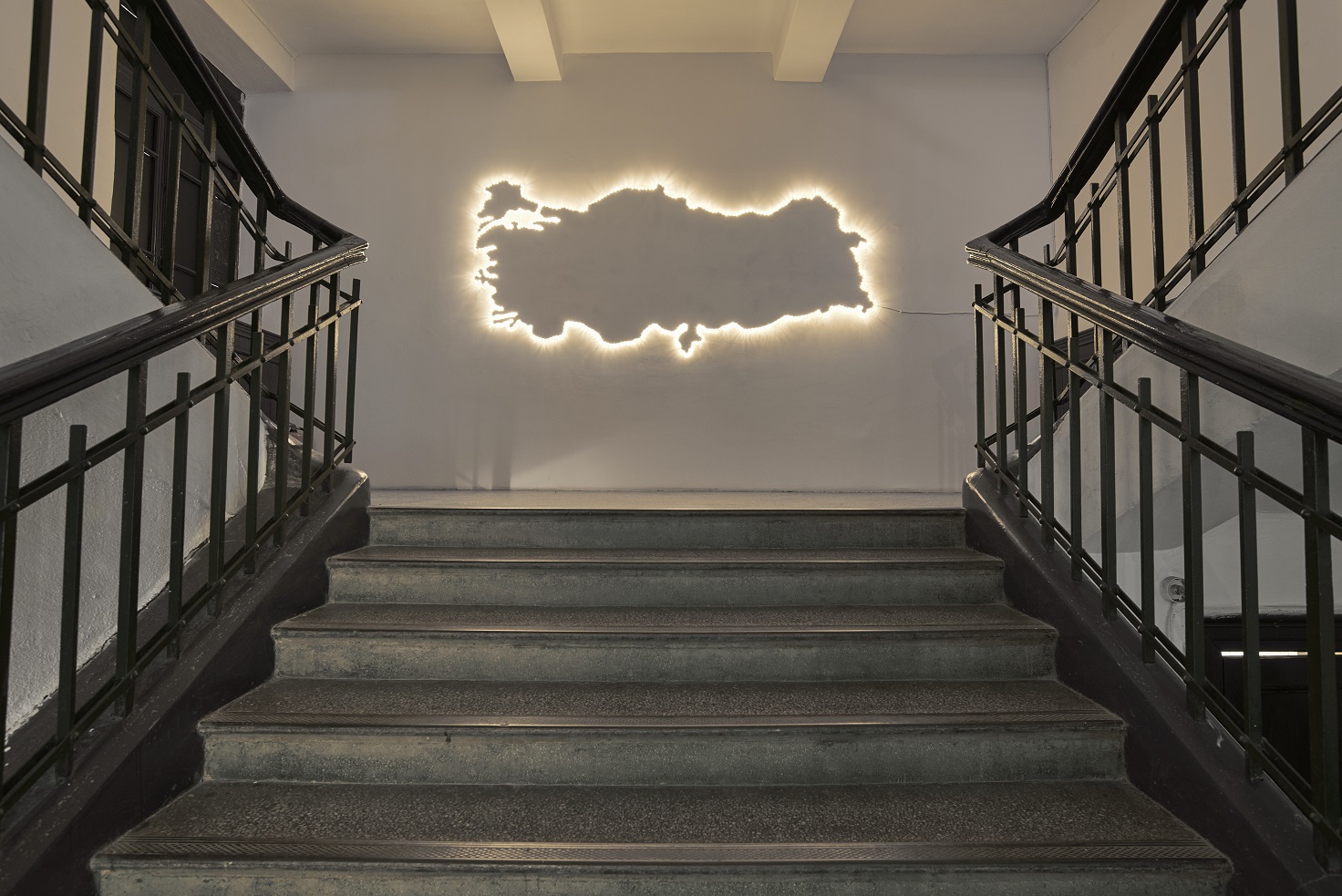
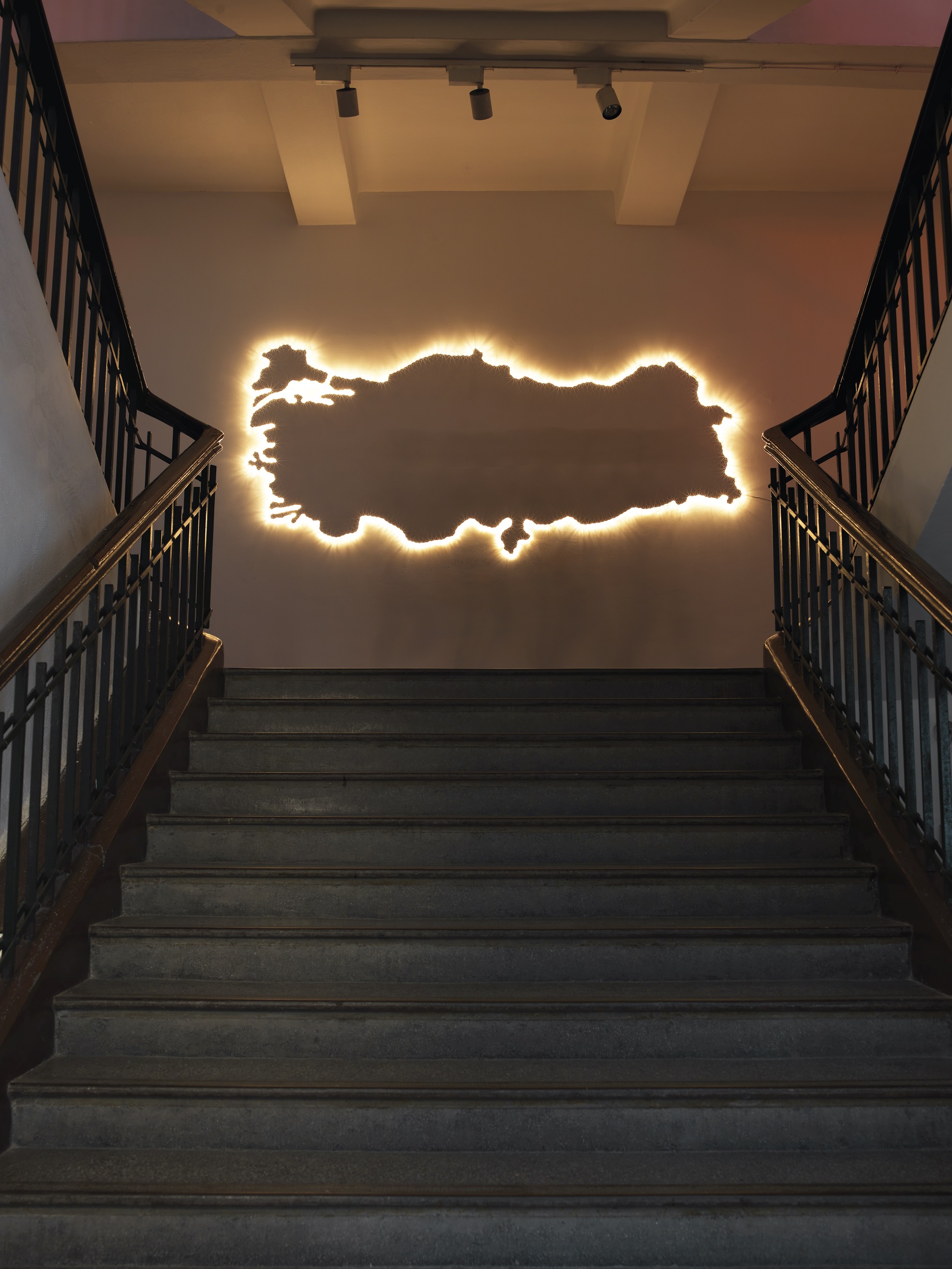
Turkey/Tree of Life, 2000, Mixed Media, 137 × 309 cm
The left hemisphere of the brain functions through logical and linear processes, while the right hemisphere operates in a sensory and holistic manner. The cerebellum, meanwhile, is connected through its own neural pathways to the cerebral hemispheres, the medulla oblongata, and the pons. Because the nerves distributed throughout the cerebellum form a branching, tree-like structure, the appearance of a cross-section of the cerebellum is also referred to as the “Tree of Life” or arbor vitae. Acting as a passage between the hemispheres, the “Tree of Life” performs a vital function by regulating the body’s balance and coordination.
From 4000 BCE to the present day, the knowledge of life embodied in the surviving “roots” of the Sumerian, Hittite, Hattian, Urartian, Phrygian, Lydian, Greek, Roman, Byzantine, Turkish, and Ottoman cultures has been interwoven across these lands. As a meeting point between East and West, this geography—with its historical, cultural, and spiritual dimensions—has, in a sense, assumed the function of a “Tree of Life” for our world.
It is of great importance that this heritage, which has expanded and transformed over thousands of years through the continuous layering of cultures across Anatolia, be made visible, revitalised, and incorporated into universal culture. Every transformation that takes place here carries the potential to determine new directions in the course of human history.
Turkey, too, is situated within these lands where East and West converge.
On our journey towards the fulfilment of our purpose of existence through renewal and purification, when you allow this ancient knowledge of life to define the boundaries of your body, it ceases to be restrictive. Instead, it becomes a protective, expansive, and illuminating presence. It is then that your inner harmony emerges as the rhythm of your heart…