


Pınar Öğrenci
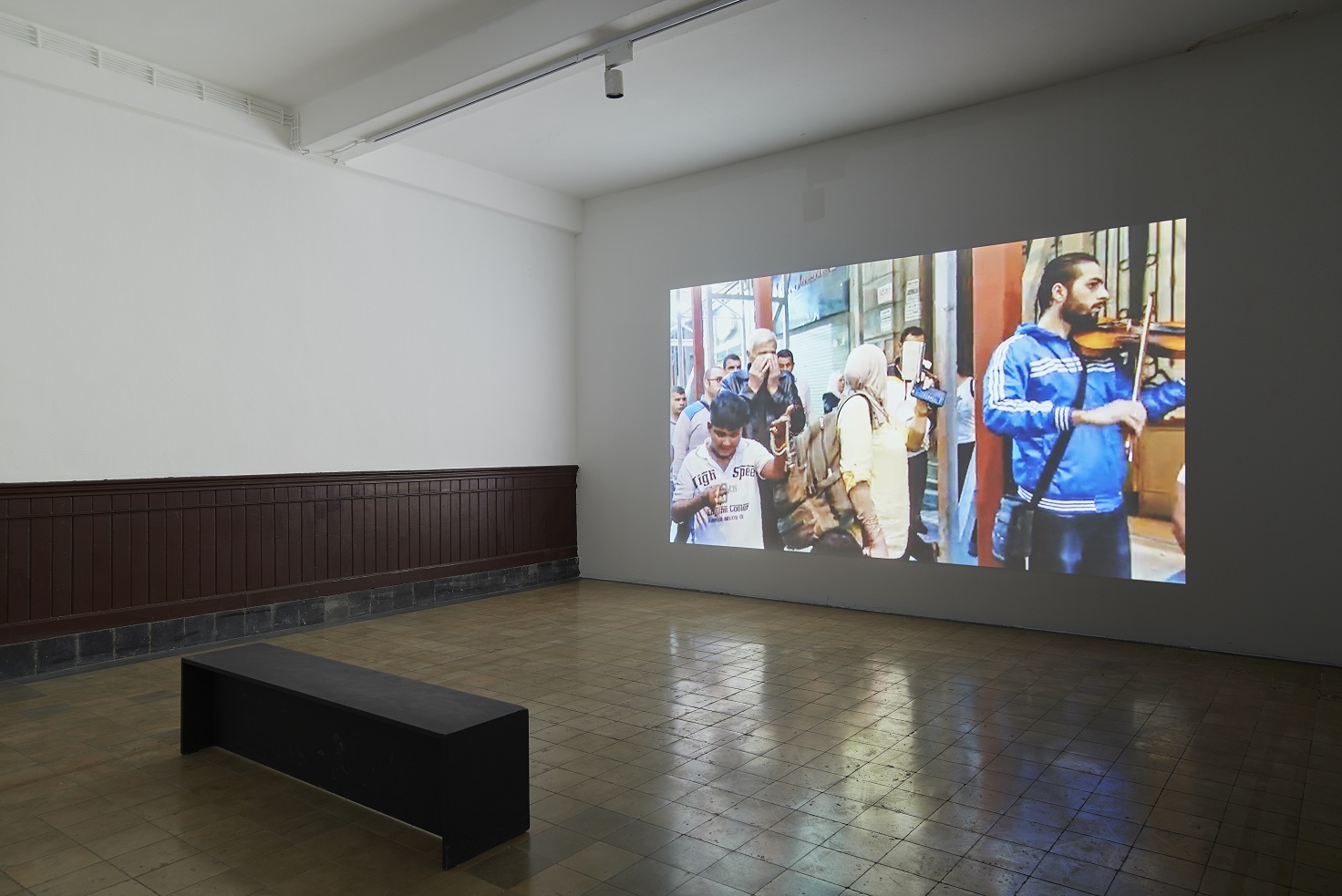
Mawtini, 2016, Video, 8’46”
Mawtini is a poem about the homeland, written in the early 1930s by the Palestinian poet Ibrahim Tuqan and set to music as an anthem in 1934 by the Lebanese composer Mohammad Flayfel. It is also recognised as an official anthem in several Arab countries, particularly Syria and Algeria, where it has served to reinforce faith in the Palestinian struggle for independence. In 2004, Mawtini was adopted as the national anthem of Iraq, replacing Ardh Alforatain, the anthem associated with the Ba’ath regime. Meaning “My Homeland,” Mawtini is sung on the streets of Istanbul by refugees displaced by war, becoming a symbol of longing for home and homeland. The video Mawtini incorporates interpretations of the national anthem and popular songs uploaded to YouTube. Bringing together recordings from Algeria, Palestine, Iraq, and Syria, the video reveals how, in a country where a stable state structure could not be established, the national anthem has diversified across a wide range of forms—from military choirs and popular singers to football matches, church music, and street performances. Through an anthem that emerged during the golden age of Arab nationalism, Mawtini opens a path towards examining the layered and fragmented nature of the concepts of nation, national anthem, and homeland across the geography of the Middle East.